Remote Event Content Onboarding Vector: Streamlining Your Workflow
In the fast-paced world of digital design and marketing, efficiency is not just a luxury; it is a requirement for survival. When you are tasked with launching a virtual summit, a webinar series, or a remote workshop, the visual presentation often dictates the audience's trust level. This is where the Remote Event Content Onboarding Vector concept comes into play. It is not merely a set of graphics; it is a comprehensive approach to visualizing the user journey, from the initial registration screen to the post-event engagement phase. By utilizing a cohesive vector template, you ensure that your brand identity remains consistent across every touchpoint, which is a cornerstone of effective brand identity management.
The appeal of a well-constructed onboarding vector lies in its versatility. The visual characteristics typically associated with these assets—clean lines, modular layouts, and intuitive iconography—speak a universal language of professionalism. When a user encounters a responsive mobile website that utilizes these vectors, they immediately understand how to navigate the content. The personality of such a design is inherently helpful and organized. It removes friction, allowing the content to shine rather than the interface getting in the way. For marketers and entrepreneurs, this translates to higher conversion rates and lower bounce rates because the user feels guided rather than lost.
The Anatomy of the 5-Step Walkthrough
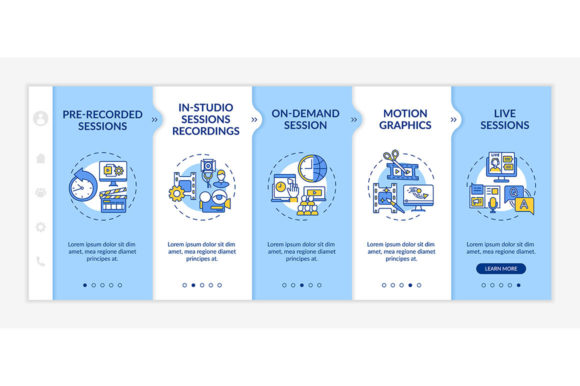
The core of the Remote Event Content Onboarding Vector is often structured around a 5-step screen walkthrough. This sequence is designed to mirror the psychological progression of the attendee. It usually begins with a "Welcome" or "Sign Up" vector, moves through "Profile Setup" or "Interests," transitions into "Accessing Sessions," and concludes with "Engagement" or "Feedback." Each of these steps requires distinct linear illustrations that communicate action without words. For instance, the "Accessing Sessions" screen might utilize a play button icon combined with a calendar graphic. These motion graphics color concepts are vital; they need to be energetic enough to maintain interest but professional enough to be taken seriously in a commercial context.
From a technical standpoint, the quality of these assets is paramount. You are not looking for pixelated JPEGs that break on high-resolution screens. You need a package that includes EPS, AI, and SVG files. These vector formats ensure that your web design elements scale infinitely without losing clarity, whether they are viewed on a small smartphone or a 4K monitor. The inclusion of PNG files with transparent backgrounds is also practical for quick drag-and-drop implementations in social media managers or basic website builders. When you download a ZIP file containing these varied formats, you are essentially future-proofing your design assets.
Practical Applications Across Industries
While the name suggests a focus on remote events, the utility of the Remote Event Content Onboarding Vector extends far beyond Zoom calls. Consider the small business owner launching a new e-commerce platform. The onboarding vectors can be repurposed to guide customers through account creation. For the blogger or publisher, these graphics can illustrate the steps required to subscribe to a premium newsletter or access a gated archive of recorded sessions. The adaptability of these design assets makes them a smart investment for anyone looking to improve user experience (UX) without hiring a full-time design team.
There is also a significant application in packaging design and physical products. If you are selling a physical kit that requires digital registration, the linear illustrations from the vector set can be printed directly onto the box or the instruction manual. This creates a seamless bridge between the physical and digital worlds. The modern typography and flat design style typical of these vectors integrate well with contemporary aesthetic trends, ensuring your materials don't look dated within six months. Whether you are a designer creating a pitch deck or a hobbyist organizing a community meetup, the professional polish provided by these vectors elevates the entire project.
Optimizing Visual Hierarchy and Readability
Using the Remote Event Content Onboarding Vector effectively requires an understanding of visual hierarchy. It is not enough to simply place the icons on the page; they must guide the eye. The "Step 1" icon should be the most prominent, perhaps using a bold accent color from your brand identity, while subsequent steps use slightly muted tones to show progression. This technique, often seen in high-end editorial design, helps users subconsciously track their progress. The vector nature of the files allows you to easily manipulate these colors in software like Adobe Illustrator, ensuring the color concept aligns perfectly with your existing palette.
Readability is another critical factor. The linear illustrations should support your text, not compete with it. If you are overlaying text on top of vector backgrounds, ensure there is sufficient contrast. The Remote Event Content Onboarding Vector template usually provides clean, uncluttered backgrounds for this specific reason. For social media graphics, where attention spans are incredibly short, these vectors act as visual anchors. They allow the viewer to grasp the "what" and "how" of your event in a split second. This efficiency is crucial for content creators fighting for attention in crowded feeds.
Technical Integration and Asset Management
When you acquire a premium asset like the Remote Event Content Onboarding Vector, proper file management is key to maximizing its value. The ZIP file containing EPS, JPG, PNG, SVG, and AI formats offers specific advantages. The SVG format is particularly valuable for web design because it is code-based and loads incredibly fast, which is a positive ranking factor for SEO. The AI and EPS files are your master files, allowing for deep customization of the motion graphics color concept. You can adjust stroke weights, remove elements, or combine different icons to create entirely new compositions.
For those working with developers, handing over SVG files ensures that the icons remain crisp on all devices, contributing to a truly responsive mobile website. If you are using a CMS like WordPress, these vectors can often be directly uploaded to your media library or used within page builder plugins. The consistency provided by using a single vector set for your entire onboarding flow cannot be overstated. It reduces cognitive load for the user. When every button, arrow, and illustration shares the same line weight and style, the interface feels intentional and trustworthy. This is the subtle power of good modern typography and graphic design.
Selecting the Right Style for Your Audience
Choosing the right iteration of the Remote Event Content Onboarding Vector depends heavily on your target audience. If your event is a corporate B2B conference, you might select a version with a more subdued color palette and rigid grid structures. Conversely, if you are targeting crafters or hobbyists, you might opt for a set that features warmer colors and slightly more organic, rounded lines. The goal is to align the visual personality of the vectors with the emotional state of your attendee. A mismatch here can create subconscious friction; a playful font paired with a serious corporate vector might confuse the viewer.
Furthermore, consider how these vectors interact with your chosen typeface. If you are using a serif font for your headings, the clean, geometric nature of most onboarding vectors provides a beautiful contrast. If you are using a sans serif font, the vectors will blend seamlessly for a minimalist look. Avoid pairing these vectors with overly decorative script fonts or handwritten fonts for functional UI elements, as this can destroy readability. The vectors are designed to be functional design assets first and decorative elements second. By respecting this hierarchy, you ensure that your remote event onboarding process is not only beautiful but also functionally superior.